Transmission Outages, Not Generation Shortages, Caused Recent Power Cuts in Lagos and Abuja
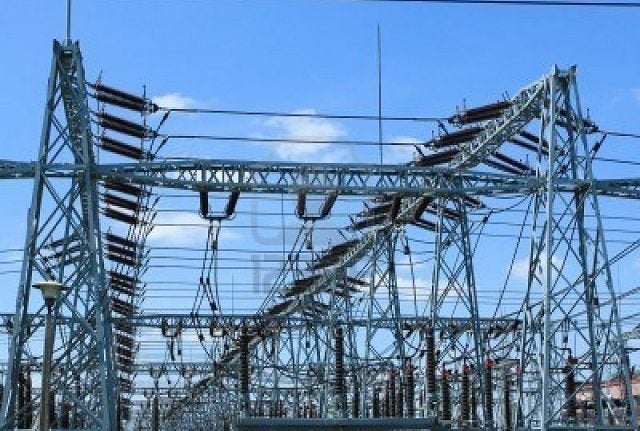
The Nigerian Independent System Operator (NISO) has clarified that recent cuts in electricity allocations to Distribution Companies (DisCos) in Lagos, Abuja, and northern regions were caused by multiple transmission line failures, rather than a shortage of national power generation.
The agency released an official statement on Sunday, titled “Clarification on Recent Changes in Power Allocations Following Transmission Line Outages.” The statement explained that the operator was forced to drastically adjust load allocations to prevent the interconnected national grid from experiencing a wider collapse.
“The availability of generation does not, by itself, guarantee that the available power can be delivered to a particular load centre,” NISO management explained. “Power transfer is dependent on the availability and capacity of transmission infrastructure and the prevailing configuration of the network”.
According to NISO, the Lagos axis suffered consecutive transmission outages that severely restricted the safe transfer of electricity into the region.

The agency recorded successive faults on critical lines, including the Olorunsogo-Ayede 330kV Line 1, Benin-Egbin 330kV Line 1, and the Benin-Omotosho 330kV Line 1. This was compounded by the prolonged, extended outage of the major Osogbo-Ikeja West circuit.
The cumulative loss of these high-voltage transmission lines reduced the total transmission transfer capability into the Lagos complex. Consequently, NISO had no choice but to slash load allocations to Eko Electricity Distribution Company, Ikeja Electric, and the Sakete international supply network to maintain system security.
Northern Grid Failures
The northern region experienced its own severe transmission crisis. Trouble began between August 24 and August 26, when the Shiroro-Mararaba 330kV Line 1 tripped. Because the remaining circuit had to bear the entire electrical load, power allocations to Abuja and parts of the north were heavily restricted.
The situation worsened on August 27 at 6:47 a.m., when the Shiroro-Mando 330kV Line 2 and the Mando-Jos 330kV Line 1 tripped simultaneously.
NISO noted that this simultaneous failure left the Mando-Jos line as the only available circuit serving Jos and the entire North-East, particularly since the alternative Apir-Lafia 330kV Lines 1 and 2 had already been out of service for an extended period due to pre-existing faults. This forced an immediate revision of allocations to Kano, Kaduna, Jos, Yola, and other surrounding load centers.
Abuja’s Brief Outage
Abuja faced similar challenges in the early hours of August 29. At 3:55 a.m., the Shiroro-Katampe 330kV Line 1 and the Gwagwalada-Katampe 330kV Line 1 both tripped, temporarily constraining supply to the Federal Capital Territory. However, NISO engineers managed to restore both circuits shortly after 7:20 a.m., recovering the lost transmission capacity for the region.
The agency emphasized that these recent incidents highlight a longstanding vulnerability within Nigeria’s electricity market. NISO stressed that increasing national generation capability will not automatically solve the country’s power woes unless there is adequate transmission capacity and a secure grid network to safely deliver that energy to consumers.
About The Author