10 Things to Know About CBN Governor Olayemi Cardoso
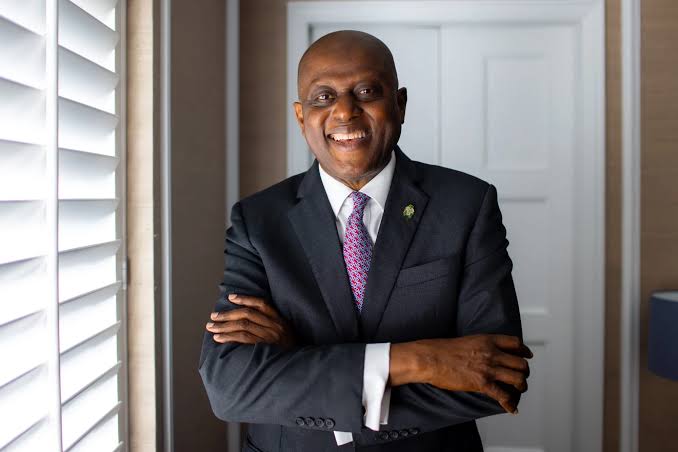
Olayemi Cardoso is one of the most influential figures in Nigeria’s economy. As Governor of the Central Bank of Nigeria (CBN), his decisions affect the naira, inflation, interest rates, banks, foreign exchange, remittances and the wider financial system. But who exactly is Olayemi Cardoso? Here are 10 things to know about the man leading Nigeria’s apex bank.
1. He Became CBN Governor in 2023
Olayemi Cardoso became Governor of the Central Bank of Nigeria in October 2023, after President Bola Ahmed Tinubu nominated him for the position. He took over from Godwin Emefiele at a challenging time for Nigeria’s economy, with high inflation, pressure on the naira, foreign-exchange shortages and concerns about confidence in the financial system.
2. Cardoso Is a Veteran Banker
Before becoming CBN governor, Cardoso spent decades in the financial sector. He had a career spanning more than 29 years in commercial banking, giving him extensive experience in corporate banking, finance and financial-sector management. He eventually became Chairman of Citibank Nigeria Limited, a position he held from 2010 to 2022.
3. He Has Government Experience
Cardoso’s experience is not limited to banking. Between 1999 and 2005, he served as Commissioner for Economic Planning and Budget in Lagos State. The position exposed him to government finances, economic planning, budgeting and public-sector policy experience that later became relevant to his role at the CBN.

4. He Studied Finance and Public Administration
Cardoso studied at Aston University in Birmingham, United Kingdom, where he obtained a Bachelor of Science degree in Managerial and Administrative Studies, with a concentration in Finance and Accounting. He later earned a Master’s degree in Public Administration from Harvard University’s Kennedy School of Government, where he concentrated on Economics and Finance. Aston University subsequently awarded him an honorary Doctorate in Business Administration.
5. He Has Served on Several Important Boards
Before becoming CBN governor, Cardoso held a number of leadership and advisory positions. Among other roles, he served as Chairman of the Lagos Economic Summit Group and was involved with organisations focused on investment, business development and economic policy. He has also served on boards and advisory bodies connected to Nigeria’s private sector and development ecosystem.
6. Reforming Nigeria’s Foreign-Exchange Market Is a Major Priority
One of the biggest issues Cardoso inherited was Nigeria’s complicated foreign-exchange market. His administration has pursued reforms designed to make the market more transparent, efficient and market-driven. The CBN has introduced measures including the Electronic Foreign Exchange Matching System (EFEMS) and a revised regulatory framework for foreign-exchange transactions. The goal is to improve confidence in the FX market and reduce distortions.
7. Fighting Inflation Is Central to His Job
Inflation has been one of the biggest economic challenges facing Nigeria during Cardoso’s tenure. The CBN has moved towards an inflation-targeting framework, using monetary-policy tools to influence price stability.
One of the most important tools is the Monetary Policy Rate (MPR). When the CBN raises the MPR, borrowing generally becomes more expensive. When it lowers the rate, borrowing can become cheaper. These decisions can eventually affect businesses, consumers, savings and the cost of loans.
8. He Wants More Nigerians Abroad to Use Formal Remittance Channels
Cardoso has also focused on Nigeria’s diaspora remittances. The CBN has introduced reforms involving International Money Transfer Operators (IMTOs), banks and Nigerians living abroad. The bank has also introduced the Non-Resident Bank Verification Number (NRBVN) as part of efforts to make formal remittance channels easier to use. The objective is to encourage more money sent home by Nigerians abroad to come through regulated channels, strengthening foreign-exchange liquidity and transparency.
9. His Decisions Affect Everyday Nigerians
Although the CBN governor may seem far removed from the everyday lives of Nigerians, his decisions can have a direct impact on the economy and households. His policies can influence the value of the naira, inflation and the prices of goods and services, bank lending and savings rates, mortgage and business loans, foreign exchange, remittances, digital payments, banking regulations and investor confidence. For instance, a change in the CBN’s interest-rate policy can affect how much businesses and individuals pay to borrow money, while changes in foreign-exchange policies can influence the cost of imported goods and services, ultimately affecting what Nigerians pay in the market.
10. Cardoso’s Bigger Goal Is to Restore Confidence in the CBN
At the heart of Cardoso’s agenda is an effort to strengthen the credibility and effectiveness of Nigeria’s central bank. His reform priorities include price stability, improved monetary-policy credibility, stronger corporate governance, financial inclusion, payment-system development and a more transparent foreign-exchange market. His background is particularly notable because it combines commercial banking, government, economic policy and private-sector leadership.
About The Author