Beyond Survival: Disability, Gender And The Right To Define Oneself In Phoenix
By Ayodeji Ben Ijagbemi
Literature becomes particularly meaningful when it moves beyond telling individual stories to examine the beliefs, prejudices and social expectations that shape human experience. Through the lives of its characters, a literary work can expose the assumptions society takes for granted and challenge readers to reconsider how people are judged.
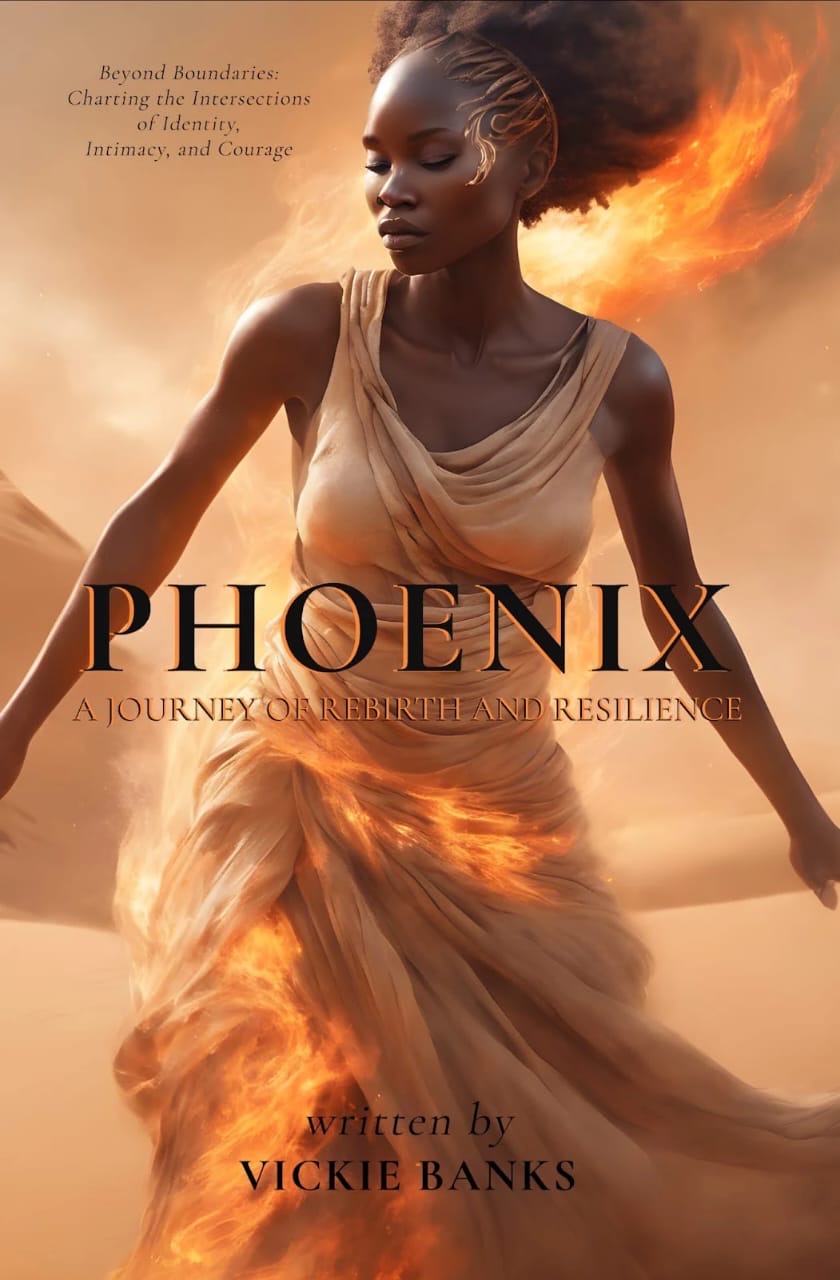
These concerns run through Phoenix: A Journey of Rebirth and Resilience, written by Folajogun Akinlami under the literary name Vickie Banks. Drawing on autobiographical experience and fictionalised storytelling, Banks follows a woman navigating physical disability, family expectations, education, romantic relationships and professional ambition in a society where acceptance is not always freely given.
Although the title evokes renewal after adversity, the book’s significance extends beyond the familiar message of overcoming difficulties. Its more searching concern is the social environment that makes some people fight repeatedly for acceptance, dignity and the freedom to determine the course of their own lives.
DISABILITY AND THE QUESTION OF HUMAN WORTH
One of the book’s notable strengths is its treatment of disability as more than a physical condition. While the protagonist lives with an impairment, many of the difficulties she encounters arise from the attitudes and expectations of those around her.
Within the Nigerian and wider African social context, disability can influence how people are perceived in matters of marriage, employment, independence and social participation. Banks explores these attitudes through relationships and everyday encounters, allowing readers to see how prejudice can operate in ordinary life.
Vickie’s struggle is therefore not limited to managing her physical condition. She must also contend with people who appear ready to determine her capabilities and prospects before giving her the opportunity to establish them for herself.
Importantly, Banks does not present her protagonist as an idealised figure whose determination makes her immune to vulnerability. Vickie experiences romantic longing, uncertainty, disappointment, ambition and moments of poor judgement. These experiences give the character a fuller human dimension.
Such complexity matters in the representation of disability. People living with disabilities should be able to appear in literature as complete individuals, with conflicting emotions, personal ambitions and imperfect decisions, rather than as characters whose only purpose is to inspire others.
Through Vickie’s experiences, the book raises a wider question about society’s tendency to judge human worth through physical appearance or perceived limitations.
GENDER, RELATIONSHIPS AND SOCIAL EXPECTATIONS
Relationships form another important part of Banks’ examination of identity and self-worth. Vickie’s expectations of love, marriage and family life reflect familiar cultural ideas about what women should aspire to achieve.
As her experiences unfold, however, these expectations become more complicated. Romantic relationships expose her to questions of trust, power, insecurity and public judgement.
Her relationship with Spence and the confrontation that follows provide a revealing example. The incident draws attention not only to the breakdown of the relationship but also to the community’s response. Attention shifts towards the confrontation itself, while the circumstances surrounding it risk receiving less consideration.
Through this episode, Banks explores a familiar problem in the treatment of women: their reactions may attract greater scrutiny than the experiences that preceded them. A woman’s actions can become the subject of public discussion while her own account of what happened is overlooked or distorted.
The episode contributes to the book’s feminist dimension by examining how social attitudes influence women’s relationships and the interpretation of their experiences.
As Vickie’s understanding develops, she is confronted with the limitations of treating romantic validation or marriage as the ultimate measure of a woman’s fulfilment. Her experiences encourage a broader consideration of personal worth, choice and independence.
EDUCATION AND THE DEVELOPMENT OF PERSONAL AGENCY
Education serves as an important setting for Vickie’s development. Beyond its formal academic purpose, it exposes her to situations that require negotiation, cooperation and self-assertion.
The account of conflict in student accommodation is particularly relevant. What begins as a disagreement over shared space develops into a question of dignity and fair treatment. The incident demonstrates how everyday encounters can test an individual’s confidence and willingness to speak up.
Banks’ treatment of education recognises that learning does not occur exclusively in classrooms. Relationships, institutional experiences and disagreements can also shape how people understand themselves and respond to challenges.
The narrative’s account of Vickie’s fellowship application, interview and eventual success extends this theme into her professional life. Her achievement reflects the importance of preparation and the ability to communicate her ideas and aspirations.
The episode is significant not merely because she succeeds, but because it shows her taking an active role in presenting her abilities and pursuing opportunities. She becomes increasingly involved in defining her public identity rather than leaving that task entirely to the judgement of others.
NARRATIVE STYLE AND LITERARY TECHNIQUE
Banks uses an accessible narrative voice, supported by dialogue, personal reflection and accounts of everyday experiences. The conversational quality of the prose gives the story an immediacy that suits its autobiographically informed approach.
The episodic structure allows the narrative to move across childhood, education, relationships and professional life, following the protagonist’s changing understanding of herself. Its Nigerian setting also provides a recognisable social environment in which family relationships, community attitudes and institutional experiences influence individual choices.
Dialogue is particularly useful in presenting differences in attitude and authority. Through conversations and confrontations, Banks brings social tensions into view without relying exclusively on direct commentary.
Nevertheless, the work has areas that could benefit from further editorial refinement. Its broad chronological scope occasionally slows the narrative as incidents accumulate. Some episodes could be more tightly edited, while certain reflective passages explain emotions or themes that preceding scenes have already conveyed.
The movement between autobiographical experience and fictionalised storytelling could also be handled more consistently in places. Greater control over narrative distance would help strengthen the book’s structural unity.
These limitations do not erase the value of its accessible prose or its engagement with questions of identity and social acceptance. Rather, they point to opportunities for greater narrative economy and artistic precision.
PERSONAL EXPERIENCE AND WIDER SOCIAL QUESTIONS
The broader contribution of Phoenix lies in its connection between private experiences and social attitudes. Disability, gender, education and relationships are not treated merely as separate subjects; they intersect in the protagonist’s efforts to establish her place in the world.
Her experiences suggest that exclusion is not always the result of an individual’s physical condition or personal circumstances. It can also arise from the expectations and judgements of families, communities and institutions.
At the same time, Banks does not make personal determination the sole answer to these difficulties. Vickie cannot control every circumstance she encounters, but her decisions increasingly shape how she responds to them.
This distinction gives the book a more grounded understanding of resilience. Courage and persistence matter, but they do not automatically remove structural barriers or guarantee acceptance. The attitudes and practices that create exclusion must also be examined.
The narrative consequently invites readers to consider both the strength required to navigate difficult circumstances and the responsibility of the society in which those circumstances arise.
A STORY OF IDENTITY BEYOND DISABILITY
Phoenix: A Journey of Rebirth and Resilience offers an engaging examination of disability, gender and personal agency through autobiographically informed storytelling. Its strengths include its accessible narrative voice, Nigerian social setting and willingness to explore experiences that are often simplified in public discussion.
Although its expansive structure would benefit from tighter editing in places, the work raises important questions about how people are perceived and the freedom they have to define themselves.
Perhaps its most significant contribution is its refusal to allow disability to become the sole explanation for a person’s existence. Vickie’s ambitions, relationships, vulnerabilities and achievements form part of a wider human experience that cannot be adequately understood through a single label.
For readers interested in disability representation, women’s experiences and contemporary African social realities, Banks’ work offers material for reflection and discussion.
Ultimately, the book challenges readers to consider what is lost when society defines people by perceived limitations rather than allowing them to demonstrate their abilities and determine their own paths.
Its central question remains worth asking: how many human possibilities are denied when other people are permitted to decide what someone can become?
Phoenix leaves readers with no simple answer. Instead, it draws attention to the attitudes that make the question necessary.
ABOUT THE REVIEWER
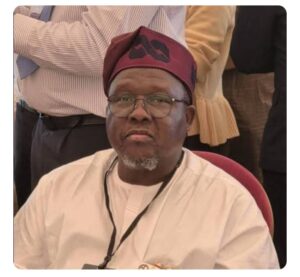
Ayodeji Ben Ijagbemi is an educator, writer and social commentator associated with the Federal College of Education (Technical), Bichi, Kano State, Nigeria. Popularly known as Alagba Ayodeji Ben Ijagbemi, his intellectual interests include education, social development, public policy and contemporary Nigerian society.
Through his writing and public commentary, he engages with questions concerning educational reform, youth development, cultural values and the role of individuals and institutions in promoting social progress. His interest in literature and social discourse informs his engagement with works that examine identity, inequality, human dignity and societal change.
About The Author