FG Unveils Fresh Reforms to Tackle Almajiri, Out-of-School Crisis
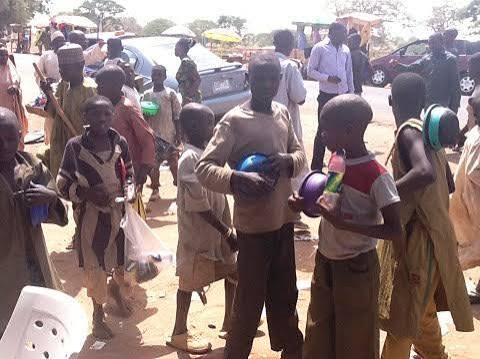
The Federal Government has introduced new policies aimed at tackling the challenges of Almajiri and out-of-school children and strengthening non-formal education across Nigeria.
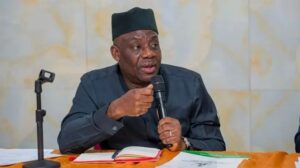
Dr Balarabe Kakale, Special Adviser to the Minister of Education on Almajiri and Out-of-School Children, disclosed this on Monday in Kaduna at a National Education Sector Renewal Initiative (NESRI) advocacy and stakeholders’ engagement on Almajiri and out-of-school children.
Kakale said the reforms were designed to improve coordination among federal and state agencies working to expand access to education for vulnerable children. According to him, the policies are built around five key pillars: foundational literacy, numeracy, vocational and technical education, digital education and civic education.
He said effective implementation by state governments would help ensure that no Nigerian child was denied access to education. Kakale urged states to domesticate the National Commission for Almajiri and Out-of-School Children Education Act, as well as policies covering Almajiri education, non-state schools, alternative learning pathways and the Accelerated Basic Education Programme.
He commended Kaduna State for its Reaching Out-of-School Children (ROOSC) project, describing the state as a model that could provide lessons for scaling up interventions nationwide. The special adviser also said the Federal Government was promoting data sovereignty through the Nigerian Education Data Infrastructure and other digital education management systems.

He explained that the initiative would enable authorities to capture information on every child, school, teacher and infrastructure gap, thereby improving the targeting of education interventions. Kakale said Nigeria currently had no final, verified figure for the number of out-of-school children, stressing that reliable data was essential to addressing the problem.
He said the government would no longer rely on third-party estimates but would track children from enrolment through retention and academic progress. He urged North-West states to embrace federal education policies and digital data systems to accelerate efforts to return children to school.
Representing the Executive Secretary of the National Commission for Almajiri and Out-of-School Children Education, Malam Halliru Musa Halliru said the commission had developed a 10-year strategic plan for 2025–2035 to coordinate sustainable interventions in Almajiri and out-of-school education.
Halliru said the National Policy on Enhancement of Almajiri Education was designed to strengthen traditional education through literacy, numeracy, vocational training and quality assurance while preserving the religious and cultural values of the Almajiri system.
He said about 200 Almajiri learners at the Tinubu Legacy Skills Training Institute in Kaduna had received Arabic, English, vocational and practical skills training and had performed well in examinations conducted by the National Board for Arabic and Islamic Studies.
The commission, he added, had established 119 learning centres nationwide and mapped more than 700,000 out-of-school children to support targeted enrolment and interventions.
Halliru said the commission was also collecting comprehensive data on Tsangaya centres to improve planning, coordination and quality assurance, while offices had been established in all states and the Federal Capital Territory.
Kaduna State Commissioner for Education, Prof. Abubakar Sambo, said poverty remained a major factor driving school exclusion, particularly in rural and peri-urban communities.
He also identified the practice of sending very young children to become Almajirai as another growing challenge in northern Nigeria. Sambo urged stakeholders to study the federal policies carefully and develop practical strategies for implementing them across states and local governments.
Meanwhile, Mr Ezra Angai, Coordinator of the Kaduna ROOSC project, said the state had adopted a holistic approach to returning children to learning. He said the project was targeting the return of 100,000 out-of-school children through formal schools and alternative learning pathways.
According to him, Kaduna had mapped 187,912 out-of-school children across its 23 local government areas, while more than 25,000 had already been returned to learning through the ROOSC project. Angai said the state had signed agreements with 25 Tsangayas, reaching 6,326 learners, with plans to engage 50 more.
He added that 272 schools, including 102 new schools, were planned under the project, while six Tsangayas would benefit from the first phase of infrastructure intervention and 27 others were proposed for the second phase.
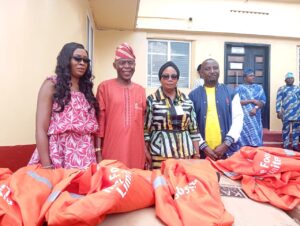
The project has also distributed more than 40,000 teaching and learning materials, including uniforms and textbooks, alongside psychosocial support. Angai said more than 2,000 children with disabilities had received assistive devices across nine local government areas.
He listed the Islamic Development Bank, Kuwait Fund, UNICEF, Save the Children International, Education Above All and the Global Partnership for Education among development partners supporting the project.
The engagement brought together government officials, traditional rulers, Islamic scholars, Alarammas, Tsangaya proprietors, civil society organisations and development partners. Participants called for stronger collaboration, improved data collection and greater community mobilisation to return vulnerable children to learning.
They also urged stakeholders to move beyond data gathering and policy formulation towards practical interventions that would improve children’s access to education, retention and learning outcomes.
The News Agency of Nigeria (NAN) reports that stakeholders pledged continued support for reforms aimed at integrating Almajiri education into broader educational opportunities and reducing the number of out-of-school children nationwide. (NAN)
About The Author