The First Teachers: How Homes Shape Nigeria’s Youngest Minds
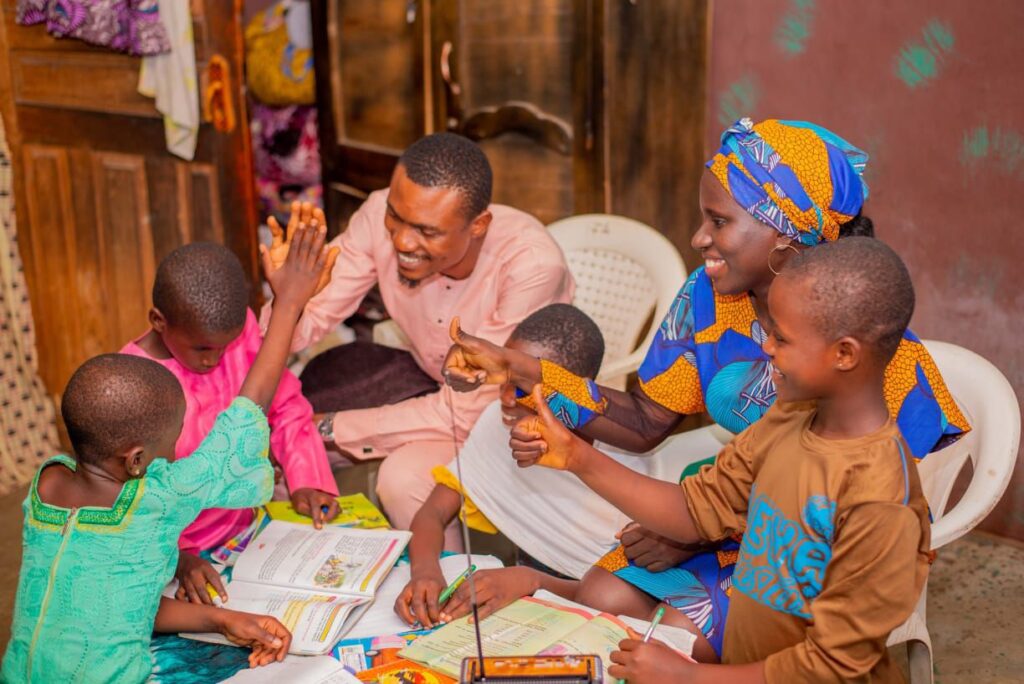
For decades, Nigeria’s education crisis has been framed around what happens inside schools. Policymakers debate classroom shortages, teacher quality, curriculum reform, and examination outcomes. Headlines focus on out-of-school children, failing learning systems, and the pressure on public education. But beneath all these visible challenges lies a quieter, less examined reality. By the time many Nigerian children enter a classroom, the most important phase of their learning has already passed.
The early years of life, from birth to about five years old, represent the most critical window in human development. During this period, the brain develops at a pace that will never be repeated. Neural connections responsible for language, memory, emotional regulation, and reasoning are formed rapidly, shaped not by formal instruction, but by interaction. A child does not wait for school to begin learning. Learning begins at birth, and it happens first at home.
Inside homes across Nigeria, children are already being prepared, or unprepared, for the future. They are learning how to speak through conversations they hear, how to respond to stress through the emotional environment around them, and how to think through the stimulation they receive or lack. These early experiences accumulate quietly, shaping their readiness for school and, ultimately, their place in society.
Yet this stage of development remains largely invisible in public discourse. Early childhood is often treated as a preparatory phase rather than a decisive one. Many parents assume that education begins when a child is enrolled in school. Policy frameworks acknowledge early childhood development, but investment, awareness, and accountability remain limited.
This gap between recognition and reality raises a deeper question. If nearly half of Nigeria’s population is under the age of 15, and if the foundations of their abilities are formed before they ever sit in a classroom, then what is happening inside homes during those earliest years?
The answer is complex. It is shaped by culture, constrained by poverty, influenced by awareness, and supported, sometimes inadequately, by institutions. But one thing is clear. The story of education in Nigeria does not begin with schools. It begins long before, in the everyday interactions between children and the people who raise them.
Learning before schooling
Early childhood development is not an abstract concept. It is a measurable, biological process that unfolds rapidly in the first years of life. According to UNICEF and the World Bank, nearly 90 percent of brain development occurs before the age of five. During this time, the brain forms neural connections at extraordinary speed, creating the foundation for learning, behaviour, and health.
What drives this development is not formal teaching, but consistent interaction. Talking to a child, responding to their gestures, singing, reading, and playing, these are the building blocks of early learning.
Dr Ifunanya Nwoye, a child development specialist, explains that the brain develops through use and that early experiences determine how effectively it functions later in life.
“Children’s brains are not waiting for school to start working. They are already active from birth, constantly forming connections based on what they experience around them. When a caregiver talks to a child, responds to their cries, or engages them in play, those interactions strengthen the neural pathways that support language and thinking. Over time, these repeated experiences shape how the child understands the world and how prepared they are to learn,” Nwoye explain.
“What makes this particularly important is that the window for this kind of development is limited. The brain is most flexible and responsive during the early years. If children do not receive enough stimulation during this period, it becomes much harder to build those skills later. You can intervene, but you are essentially trying to repair something that should have been built earlier.
“This is why early childhood development is so critical. It is not just about keeping children alive and healthy. It is about actively shaping their ability to learn, communicate, and function in society. And most of that work happens long before they enter a classroom.”
Despite this, awareness of early stimulation remains uneven. Many caregivers still associate learning with formal education, overlooking the significance of everyday interaction.
Culture, parenting, and the realities of home
Across Nigeria, parenting practices are shaped by a combination of tradition, economic realities, and social change. In many communities, caregiving extends beyond parents to include grandparents, older siblings, and neighbours. This communal structure can provide children with multiple sources of interaction and learning.
Storytelling, in particular, has long served as an informal educational tool. In many northern and southwestern communities, elders pass down stories that teach moral lessons while developing children’s language and imagination.
Sociologist Ibrahim Sadiq notes that traditional systems of caregiving often provided natural environments for early learning.
“In many Nigerian communities, children grow up in environments where learning is embedded in daily life. They listen to stories, they observe adults, they participate in small tasks. These experiences expose them to language, social norms, and problem-solving without the need for formal instruction. It is a very organic form of education, and it has worked for generations,” Sadiq said.
“However, what we are seeing now is a shift. Urbanisation, economic pressure, and changes in family structure are reducing the amount of time and attention children receive from caregivers. Parents are working longer hours, extended families are less present, and children are spending more time in less interactive environments.
“This does not mean that parents do not care. It means that the conditions under which they are raising children have changed. And those changes have implications for how children develop in their early years.” For many families, the biggest constraint is not knowledge, but time.
In urban centres, parents often leave home early and return late, limiting opportunities for sustained engagement with young children. In lower-income households, economic survival takes priority over structured caregiving.
Chidinma Okeke, a trader in Lagos, describes the challenge in practical terms.
“I leave my house before 6 am in the morning because I have to set up my stall early. By the time I come back, it is already evening, and sometimes my daughter is asleep. Even when she is awake, I am tired from the day’s work. I try to talk to her, to play with her, but it is not something I can do consistently every day.
According to Okeke, “I know that children need attention, and I feel it when I am not able to give her enough time. But there are also realities. There is rent to pay, food to buy, transport costs. You are constantly balancing what you want to do as a parent with what you need to do to survive.
“If there were more support, maybe things would be different. But for now, many parents are just doing their best with what they have.”
About The Author