Oyo Abductions: Troops Closing In On Kidnappers, Says Army Chief
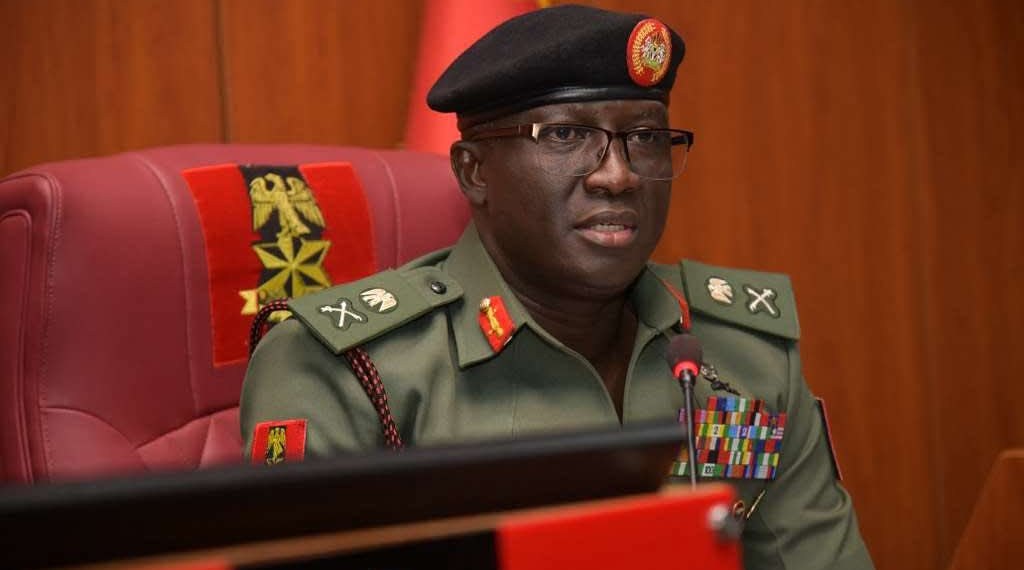
The Chief of Army Staff (COAS), Lieutenant General Waidi Shaibu, has assured the nation that the military is making tremendous progress in its ongoing operations to rescue the 39 pupils and seven teachers abducted from Oyo State.
The victims were kidnapped by armed assailants on May 15 from three different schools situated in the Orire Local Government Area of the state.
Speaking during an interactive session with media executives on Saturday in Port Harcourt, Rivers State—an event marking the 2026 Nigerian Army Day Celebration (NADCEL)—Gen. Shaibu confirmed that the military is actively closing in on the perpetrators.
“Operations are currently ongoing to rescue those children abducted in Oyo State, and we are making tremendous progress,” the Army Chief stated, expressing strong confidence that the tactical operation will culminate in the safe rescue of the victims and their eventual reunion with their families.
He further described the South-West as one of the most peaceful regions in the country, noting that the Oyo abduction stands as an isolated anomaly in an otherwise secure zone.
Beyond the South-West, the COAS provided a comprehensive brief on the Nigerian Army’s active engagements across the nation’s other geopolitical zones.

Highlighting the North-East, Gen. Shaibu revealed that troops attached to Operation Hadin Kai have recorded massive tactical victories. In a recent joint operation alongside United States partners, the military successfully neutralized a high-profile Islamic State commander identified as Abu Bilal al-Minuki.
“Operation Hadin Kai has neutralised over 1,872 insurgents, while many terrorists have surrendered to troops,” he announced.
He pointed out that the radically improved security landscape has facilitated the return of displaced persons to their ancestral homes, referencing the recent official closure of the Internally Displaced Persons (IDPs) camp in Bama, Borno State.
In the North-West, Operation Fansan Yamma continues to systematically degrade bandit networks, seizing weapons and neutralizing criminal elements.
Similarly, the COAS noted that Operation Enduring Peace, Operation Whirl Stroke, and the newly launched Operation Savannah Shield have significantly stabilized the North-Central states of Plateau, Benue, Nasarawa, Kwara, Niger, and Kogi.
Addressing the southern regions, Shaibu highlighted that the South-East enjoyed a remarkably peaceful atmosphere during the last Christmas celebrations with no reported disruptions.
In the South-South, he stated that the nation’s crude oil output has seen a notable surge, directly reflecting the success of intensive military clampdowns on illegal bunkering, pipeline vandalism, and crude oil theft.
Massive Recruitment and Modernization Drive
To sustain these operational successes, Gen. Shaibu disclosed that President Bola Tinubu has approved sweeping measures to expand the military’s manpower. This includes the establishment of a brand-new Nigerian Army depot in Amasiri-Edda, Ebonyi State.
With the addition of the Ebonyi facility, the Army now operates three primary training depots, alongside existing bases in Zaria, Kaduna State, and Osogbo, Osun State. These three facilities are tasked with recruiting and training 28,000 young Nigerians.
“I recently directed the recruitment of 28,000 young Nigerians to enhance manpower for our various operations across the country,” the COAS explained.
“So far, the Zaria depot has graduated 6,000 soldiers, Osogbo has graduated 5,000, while Amasiri-Edda will soon graduate 3,000, bringing the total to 14,000.”
Gen. Shaibu emphasized that the Army has aggressively modernized its training curriculum to focus on advanced marksmanship, counter-insurgency, and counter-terrorism.
Recruits now undergo 11 months of grueling military training, encompassing advanced infantry tactics and acclimatization exercises.
Furthermore, the Army has heavily invested in modern hardware, acquiring state-of-the-art Armoured Personnel Carriers (APCs), Mine-Resistant Ambush Protected vehicles (MRAPs), and Unmanned Aerial Vehicles (UAVs).
“The acquisition of armed and surveillance drones, alongside enhanced aviation capabilities, has improved response times and operational success across theatres of operation,” Shaibu concluded, reaffirming the military’s unwavering commitment to neutralizing emerging threats and safeguarding Nigeria’s territorial integrity.
About The Author