Nigeria Must End Reliance on Govt Funding for Power Sector — Babalola
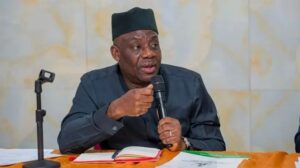
Nigeria must end its long-standing reliance on Federal Government funding and interventions to keep the electricity sector afloat, Special Adviser to the President on Power, Dr. Lanre Babalola, has said.
Babalola, who chairs the Presidential Task Force on Power Sector Reset and Restoration, said the sector must be fundamentally restructured to attract private capital and operate on a commercially sustainable basis.
He spoke in a keynote address titled “From Market Survival to Market Sustainability: Resetting Nigeria’s Electricity Sector for Growth,” delivered at an event marking Dr. Joy Ogaji’s 15 years of service in Nigeria’s power sector and a decade as head of the Association of Power Generation Companies.
The event also featured the launch of Ogaji’s book, Powered by Purpose: Memoir of a Female CEO in a Male-Dominated Sector. According to Babalola, Nigeria’s electricity crisis goes beyond insufficient generation capacity. The bigger challenge, he said, is the sector’s inability to consistently turn available electricity into reliable supply, revenue and sustainable investment.
He explained that electricity only creates economic value when it can be generated, adequately fuelled, evacuated, distributed, metered, billed, collected and ultimately paid for.
“When revenues are not collected, DisCos cannot meet their obligations. When GenCos are not paid, they cannot adequately maintain their plants or pay for gas. When gas suppliers are not paid, investment in gas supply suffers,” he said.
Babalola described the situation as a “value-chain liquidity problem,” arguing that electricity, gas and finance are interconnected and must be addressed as a single economic system. While acknowledging that government interventions had helped keep the market functioning, he warned that sustaining the sector through public funding was not a long-term solution.

“Keeping a market alive is not the same thing as making it sustainable,” he said. The presidential aide said government should gradually move away from directly financing the sector and instead focus on creating conditions that encourage private investors to commit capital and earn sustainable returns.
“Government intervention should create the market, not become the market,” he said. He identified predictable regulation, credible contracts, payment security, reliable gas supply, bankable offtake arrangements and transparent settlement systems as essential to attracting private investment.
According to Babalola, the success of the power-sector reset should not be measured simply by how much government spends, but by how much private investment the market can attract without the government bearing all the commercial risks.
He also urged stakeholders to maximise existing generation, transmission and distribution infrastructure before committing scarce capital to new projects. Viable power plants should be rehabilitated, transmission bottlenecks removed and distribution networks strengthened to increase electricity offtake, he said.
“Our objective should not simply be more megawatts. It should be more value from every megawatt,” Babalola said. He identified high technical, commercial and collection losses as major obstacles to the financial sustainability of the sector and called for detailed monitoring of distribution networks to determine where losses occur and how much electricity is actually metered, billed and collected.
While describing metering as important, Babalola said it must be accompanied by broader measures to tackle technical and commercial losses as well as poor revenue collection.
He also called for reforms to electricity tariffs and subsidies, arguing that the gap between the cost of supplying electricity and what consumers pay has merely shifted the financial burden from one part of the value chain to another.
Babalola stressed that cost-reflective tariffs should not simply translate into higher electricity bills, but should come with lower operating costs, greater efficiency, improved service delivery and stronger revenue collection. Where subsidies are necessary, he said they should be targeted, transparent and fully funded.
The presidential aide further advocated the completion of Nigeria’s transition to a competitive wholesale electricity market based increasingly on bilateral contracts between credible buyers and sellers.
He said the existing single-buyer model was designed as a transitional arrangement and should not become a permanent constraint on the sector.
Babalola said the transition should be backed by direct contracts, payment guarantees, firm gas arrangements, transparent network access, effective settlement systems and penalties for non-performance.
“Those who contract must have the capacity to pay. Those who sell must have the capacity to deliver. And those who fail to perform must bear the consequences,” he said.
He also called for integrated planning across gas, generation, transmission, distribution and electricity demand, arguing that power investments should be closely linked to productive economic activity.
According to him, a reformed electricity sector should support Nigeria’s industrialisation, agriculture, digital economy, urban development and job creation.
Babalola said the ultimate goal of the reset was to move Nigeria’s power sector from market survival to sustainability, transform stranded assets into productive ones and ultimately shift the country from “managing scarcity to powering prosperity.”
Iledare Calls for Viable Electricity Market
Speaking at the event, energy economics expert Prof. Wumi Iledare described Nigeria’s power sector as both one of the country’s biggest economic challenges and one of its greatest opportunities.
“The challenge is not simply about generating more electricity; it is about creating a financially viable and efficiently governed electricity market where investment is rewarded, contracts are respected, liquidity is sustained, and consumers ultimately receive reliable and affordable power,” Iledare said.
He also commended Ogaji for her contributions to Nigeria’s electricity industry, particularly her role in bringing the realities of the generation segment into national policy discussions.
Iledare said Ogaji’s contribution went beyond representing generating companies, noting that she had consistently challenged stakeholders to confront the fundamental economic realities of Nigeria’s power market.
About The Author