Tinubu Orders Refinery Reset as NUPENG Backs Subsidy Reform
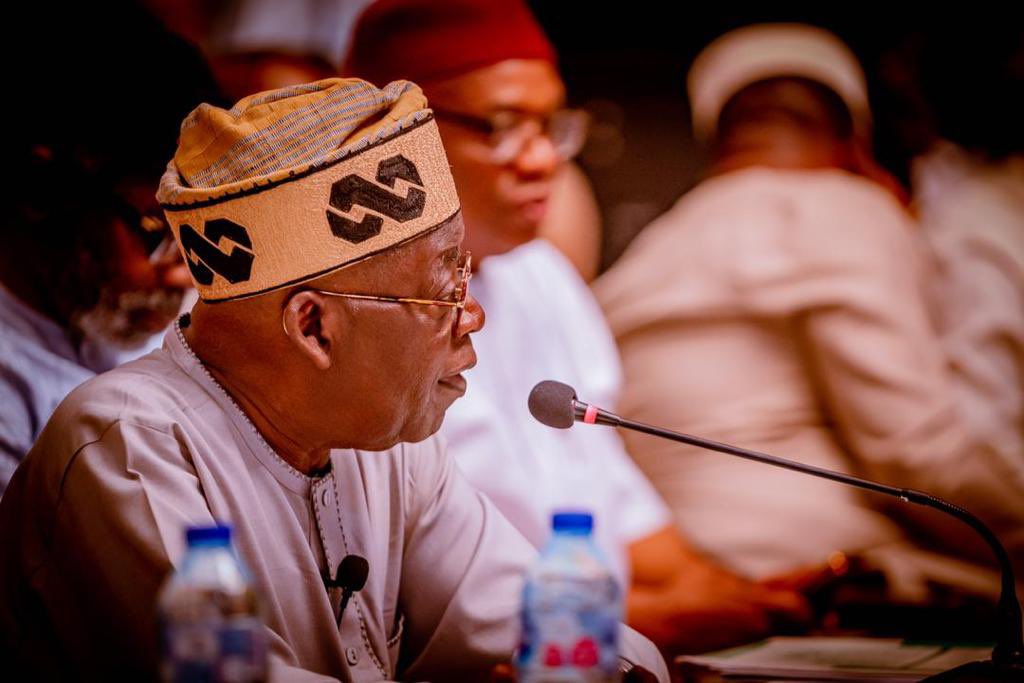
President Bola Ahmed Tinubu has ordered a fresh technical and structural review of Nigeria’s refineries, saying the facilities will be returned to productive operation only after a “firm reset” that makes them commercially viable and capable of delivering value on the huge investments already made in the sector.
Tinubu made the commitment on Thursday while receiving the national executive of the Nigerian Union of Petroleum and Natural Gas Workers (NUPENG), led by its National President, Comrade Salimon Akanni Oladiti, at the State House in Abuja.
The President said the Federal Government would undertake detailed research and technical assessments of the refineries to identify their structural, operational, financial and managerial challenges before implementing sustainable solutions.
“The refineries that you mentioned are going to come back to work; we’re just building a very firm, resetting, and structural reworking of the economy of it,” Tinubu said.

He stressed that the mere restart of a refinery would not constitute success unless the facility could operate profitably and generate the value for which it was established.
“Ordinary flame and smoke of a refinery doesn’t mean that it’s working until it’s profitable and yields the value for which it is built,” he said.
The President’s position marks a shift from focusing simply on restarting the country’s long-troubled refineries to ensuring that any rehabilitation or restructuring produces commercially sustainable operations.
The issue has become increasingly important as Nigeria seeks to reduce dependence on imported refined petroleum products and retain more value from its crude oil resources within the domestic economy.
NUPENG had asked the President to sustain efforts to revive the refineries, arguing that functional domestic refining capacity would strengthen energy security, reduce import dependence and create more opportunities for Nigerian workers.
Oladiti commended Tinubu for removing the petrol subsidy, describing the decision as a courageous reform that had saved the country from years of financial drain and depletion of national resources.
He said resources freed by the subsidy removal were beginning to support infrastructure development and other areas of the economy.
The union president particularly cited the rehabilitation and construction of major federal highways, including the 750-kilometre Lagos-Calabar Coastal Highway and the 1,068-kilometre Sokoto-Badagry Superhighway, as evidence of increased infrastructure spending.
“For our members, a good road is the difference between arriving home safely and never arriving at all,” Oladiti said.
He nevertheless urged the Federal Government to accelerate efforts to restore the refineries, saying their revival would strengthen Nigeria’s energy security and reduce reliance on imported petroleum products.
The President also promised greater inclusion of NUPENG in the implementation of the Presidential Initiative on Compressed Natural Gas, while challenging the union to ensure the benefits of the programme reach commuters.
Minister of Information and National Orientation, Mohammed Idris, said NUPENG’s acknowledgement of the administration’s reforms was significant because of the union’s influence in the oil and gas sector.
He particularly cited the removal of the fuel subsidy and increased infrastructure activity as areas where the government’s reforms were producing visible outcomes.
The meeting also touched on local government autonomy, with Tinubu saying constitutional issues affecting its implementation were being reviewed.
The refinery discussion, however, remained the major economic issue, given the strategic importance of domestic refining to Nigeria’s fuel supply, foreign exchange demand and energy security.
For the Federal Government, the central test is no longer merely whether the refineries can restart, but whether they can be restructured into efficient, profitable assets capable of supplying the domestic market and reducing the economic cost of reliance on imported refined petroleum products.
For Nigeria’s energy economy, a commercially viable domestic refining system would also strengthen the link between higher crude production and local value addition, potentially increasing the economic returns retained from the country’s petroleum resources.
About The Author